Quiz
When should you stop for yellow?
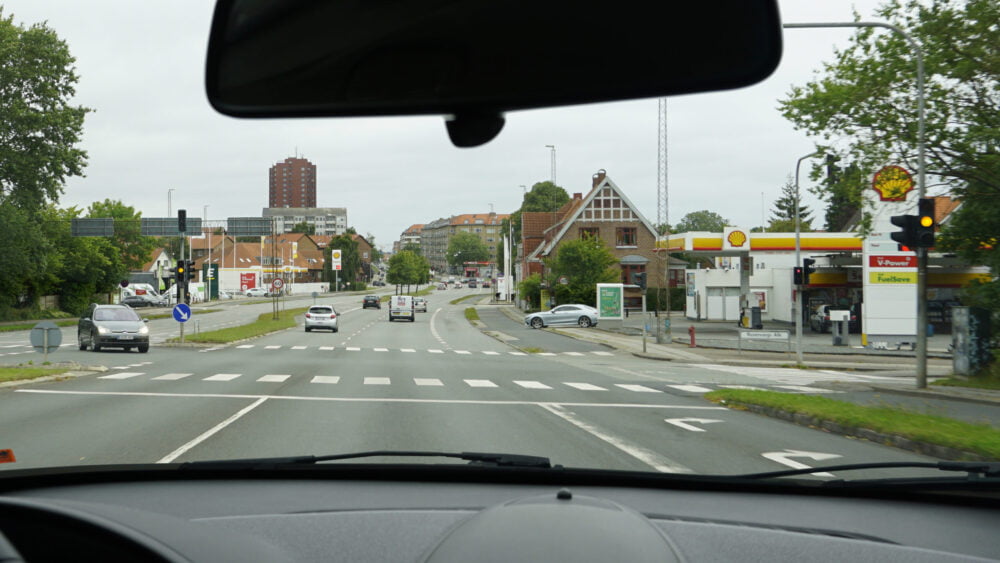
You are travelling at 40 km/h and are going straight ahead at the intersection. There is no one travelling behind you. How will you proceed?
Please select 2 correct answers
Explanation: An amber light means "STOP" if it is possible to stop without danger. If the signal was about to turn green, it would have been both yellow and red. Here there is no danger, no rear-end traffic and plenty of room to stop. There is a high risk that the oncoming driver waiting for a clear lane to complete their turn will pull out in front of you, expecting you to stop at a yellow light.
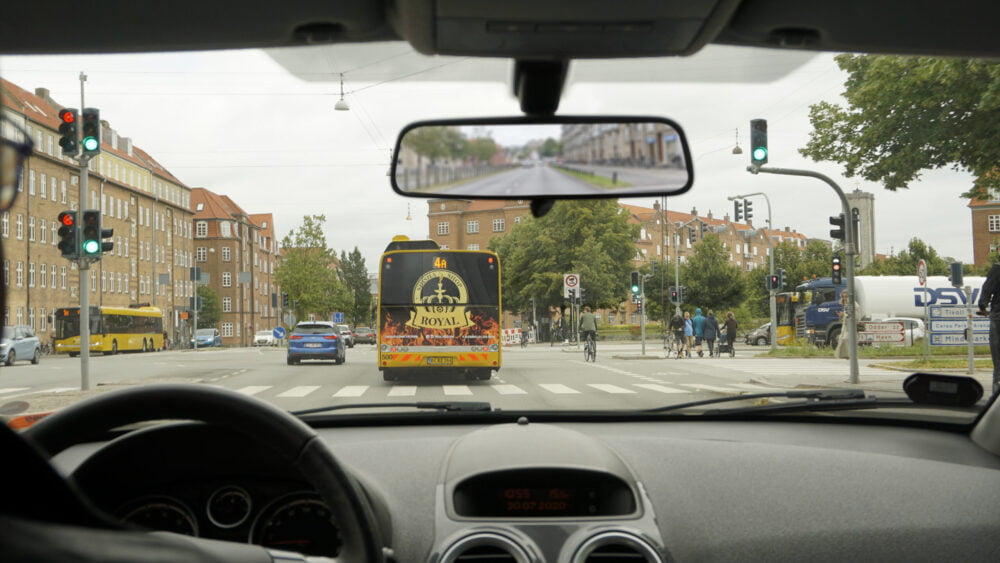
You are going straight ahead at the intersection. The bus is stopped at the intersection and you are not allowed to change lanes. How do you want to proceed?
Please select 3 correct answers
Explanation: Since the pedestrian and cyclist signal has changed to red, you need to be able to anticipate that the traffic light will soon change to red. You cannot be sure of crossing the intersection until the light has changed to yellow and red. You must therefore stop at the stop line.
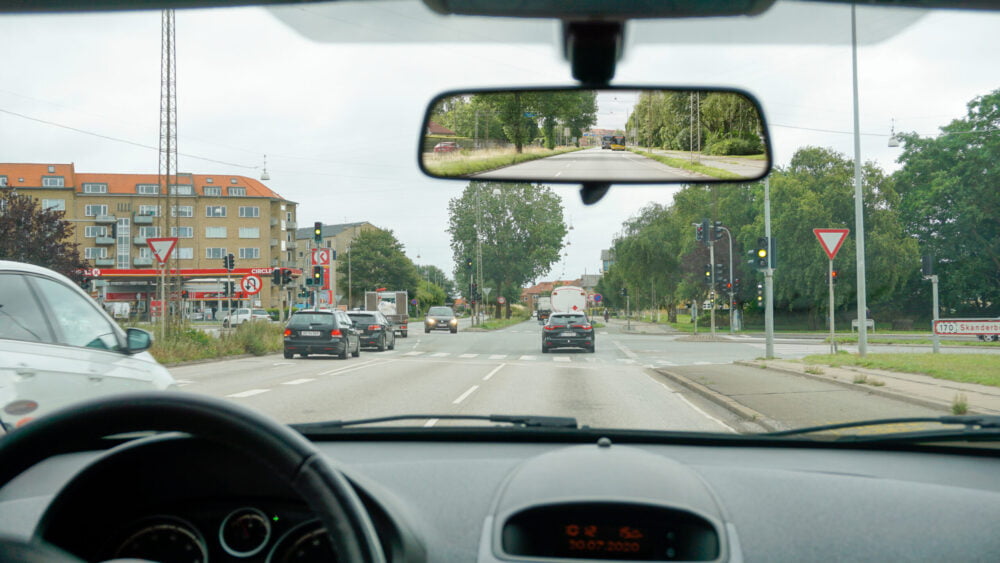
You want to turn right at the light-controlled intersection. What do you do?
 Drive4you: Theis Dam
Please select 2 correct answers
Explanation: The traffic lights change from green to yellow, which means stop. You should therefore use your mirrors to orientate yourself to the rear and bring the car to a stop if possible. In this case, those behind you are far away, so it is safe to brake.
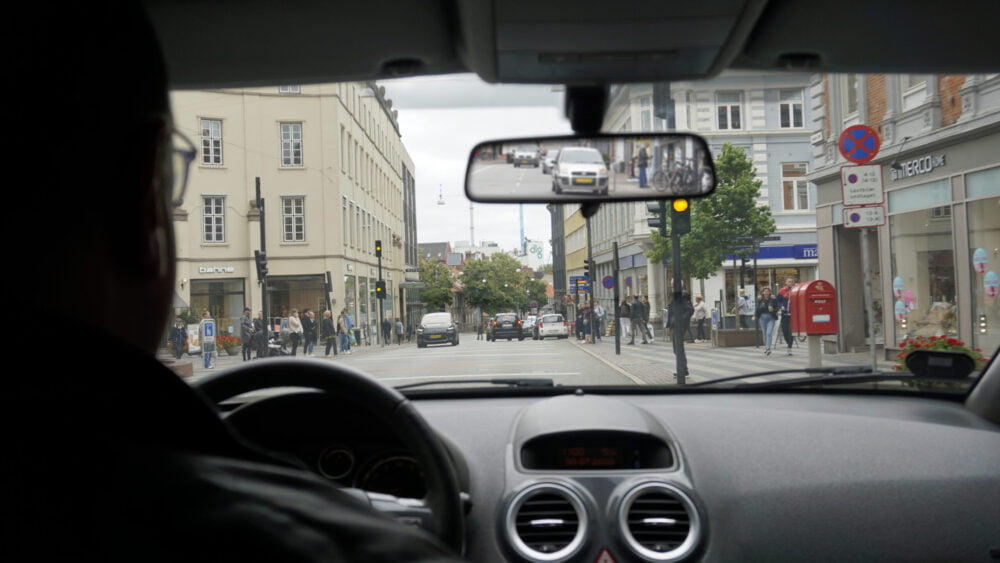
You're travelling at about 40 km/h. How do you want to continue?
Please select 2 correct answers
Explanation: Even though the pedestrian may still have a red light, there is a risk that the pedestrian will step into the pedestrian crossing, as the light will turn green for pedestrians very soon. Especially if the pedestrian has observed that you have a yellow light and expects you to stop. Note that this pedestrian crossing is wider than normal.
You've noticed that the traffic light has been green for a long time. You are about to enter the intersection. What should you pay special attention to?
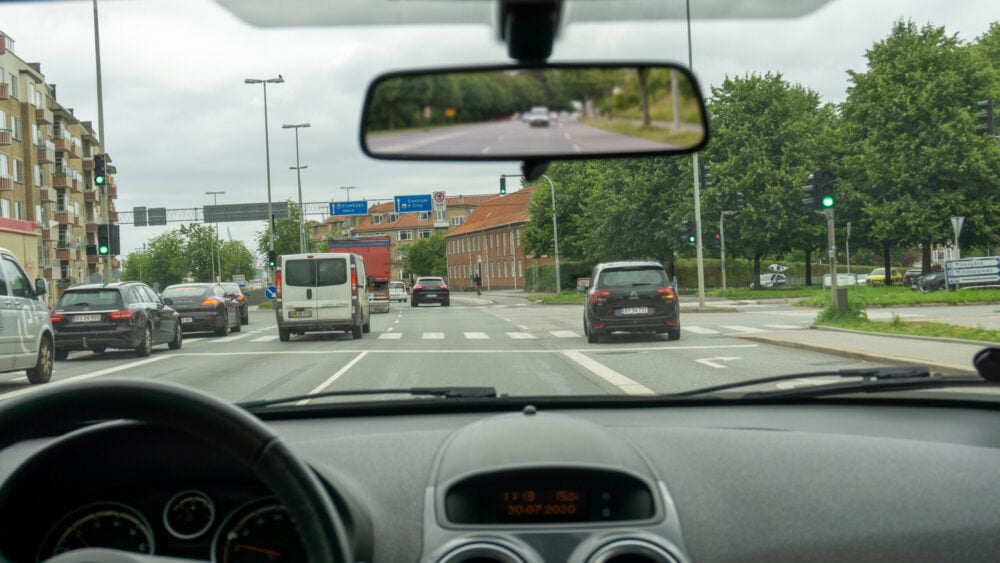
Please select 3 correct answers
Explanation: Since you are driving in an urban zone and have had an unobstructed view of the light control, which has been green for an extended period of time, you should be aware of a change to yellow before you reach the intersection. One sign may be that the pedestrian crossing light has changed to red. Prepare to bring the vehicle to a stop. If you continue into the intersection on a yellow light, you may be a nuisance to other traffic in the intersection.
You are close to the intersection and travelling at the maximum speed limit of 60 km/h. What do you want to do?
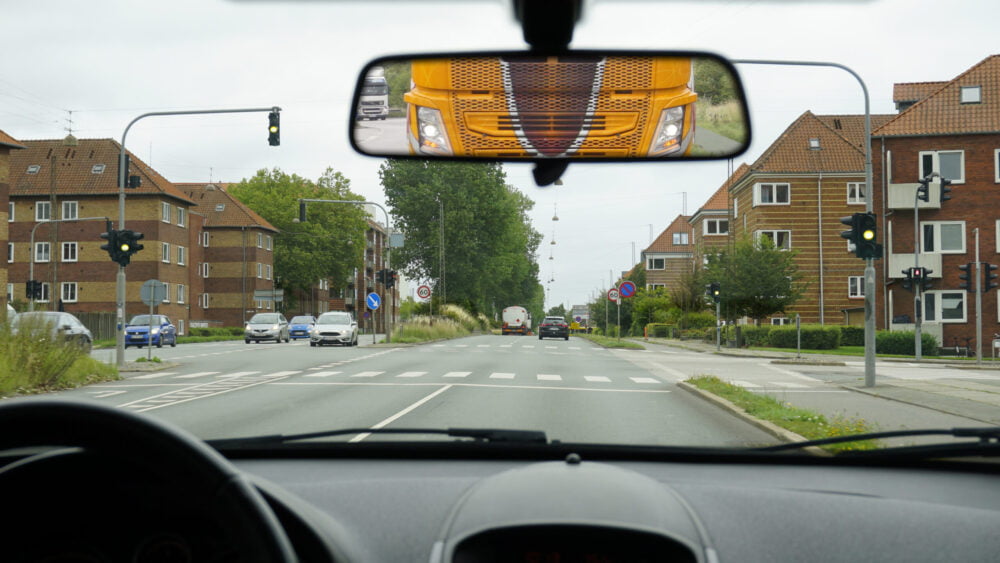
Explanation: The light is yellow, about to turn red. You are so close to the intersection that in order to brake, you have to brake quite hard. The lorry behind you is close and cannot brake in the same short distance as you. Therefore, you must continue across the intersection at unchanged speed, as you are not allowed to speed up.
You are travelling at 40 km/h. The pedestrian signal has been red for a while. There is no one travelling behind you. What do you do?
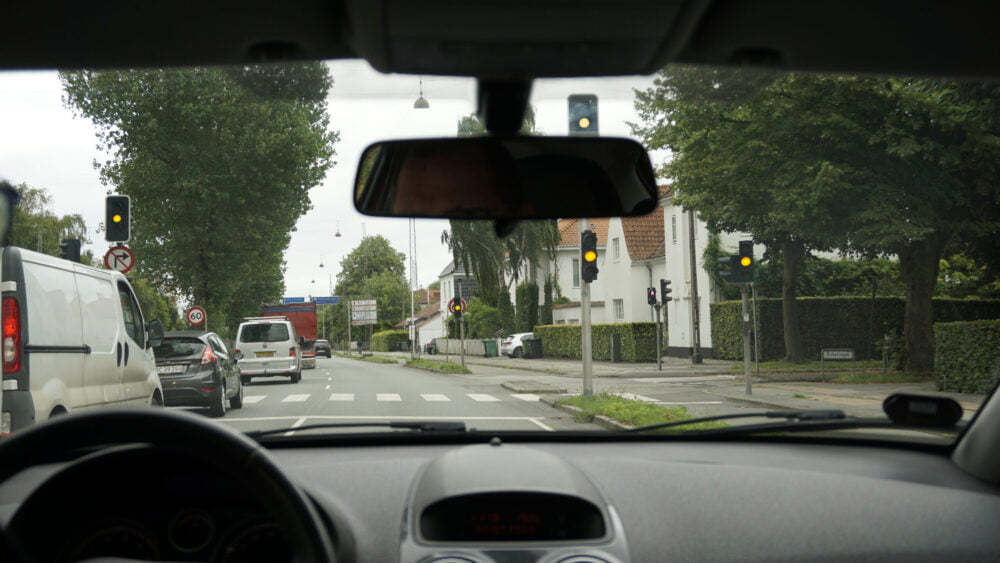
Please select 2 correct answers
Explanation: In dense traffic, it is important to adjust your speed and be aware of drivers behind you. As mentioned in the question, there are none. There is no risk in stopping here. You have noticed that the light has changed to red for pedestrians and have therefore prepared yourself for the fact that the light is likely to turn red.
You're travelling at about 50 km/h. How do you want to continue?
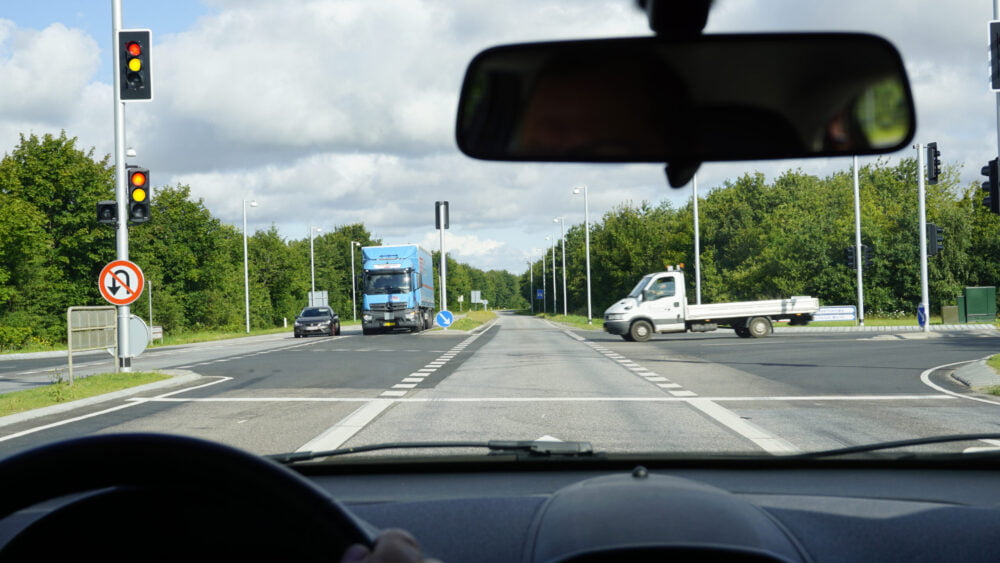
Please select 3 correct answers
Explanation: Red/yellow means stop, but the signal is about to turn green. Green means go, but only if the road is clear, i.e. if the junction is clear. You should therefore wait to enter the intersection until the car in the intersection is gone.
 EN
EN  DA_DK
DA_DK  UK
UK  TR
TR  DE
DE  ET
ET  LT
LT  LV
LV